Before the sun had rose , we were on the road headed out to fish. Sunday morning was unlike most Summer days. Usually hot and humid. Only getting worse as the day progressed. Not this morning. It was cooler, the air was crisper, and there wasn't any humidity to be found. Just like a Spring day! On this trip, we weren't going far. Just a 10 - 15 minute drive. Destination: Jones Mill. Past Lake Catherine and down to the Ouachita River. We parked just feet from Remmel Dam. My husband unloaded the fishing gear and spread it out on the tailgate of the truck. I readied my camera and headed toward the bank, with Tim (my husband) fast behind me. First observation- most of the bank was still wet, but the river was low. Remmel Dam only had one gate open and the turbine was completely off. Fishing here in the past years has become a matter of luck. I went off in search of new photos and Tim cast his line. I did manage to get a shot of him before going. They say a picture is worth a thousand words, so I will let them tell the rest of this story.....
Monday, July 29, 2013
Sunday, July 28, 2013
Howdy Ya All ! Today I'd like to share a few photos of flying insects I've shot in our area. I feel as if I am now obsessed with taking these kind of photos. As I go on a hunt for information and the identity of each insect, I am awed by what I learn, and how they look. Each is a creation designed to be delicate, yet engineered perfectly for their environment. To view these we must venture into the world of macro. For otherwise...a bug is just a little bug.
| Female Crane Fly- sometimes referred to as a Skeeter Hawk. There are 4,250 species, all feed on nectar! This is a type of Fly. |
| The Moth is in the same family and order as the Butterfly. |
| The Fly ! The common house fly makes up 91% of all flies in human habitations. They can carry serious diseases. The female can lay 500 eggs in several (75-150) batches. |
| Robber (Assassin) Fly |
| The Moth is mainly seen at night around lights. The Butterfly is mainly a day-flying insect. |
| The Misquito has been branded the most dangerous animal on the Earth. It is able to transmit diseases such as Malaria, Yellow Fever and Filariasis. |
Saturday, July 27, 2013
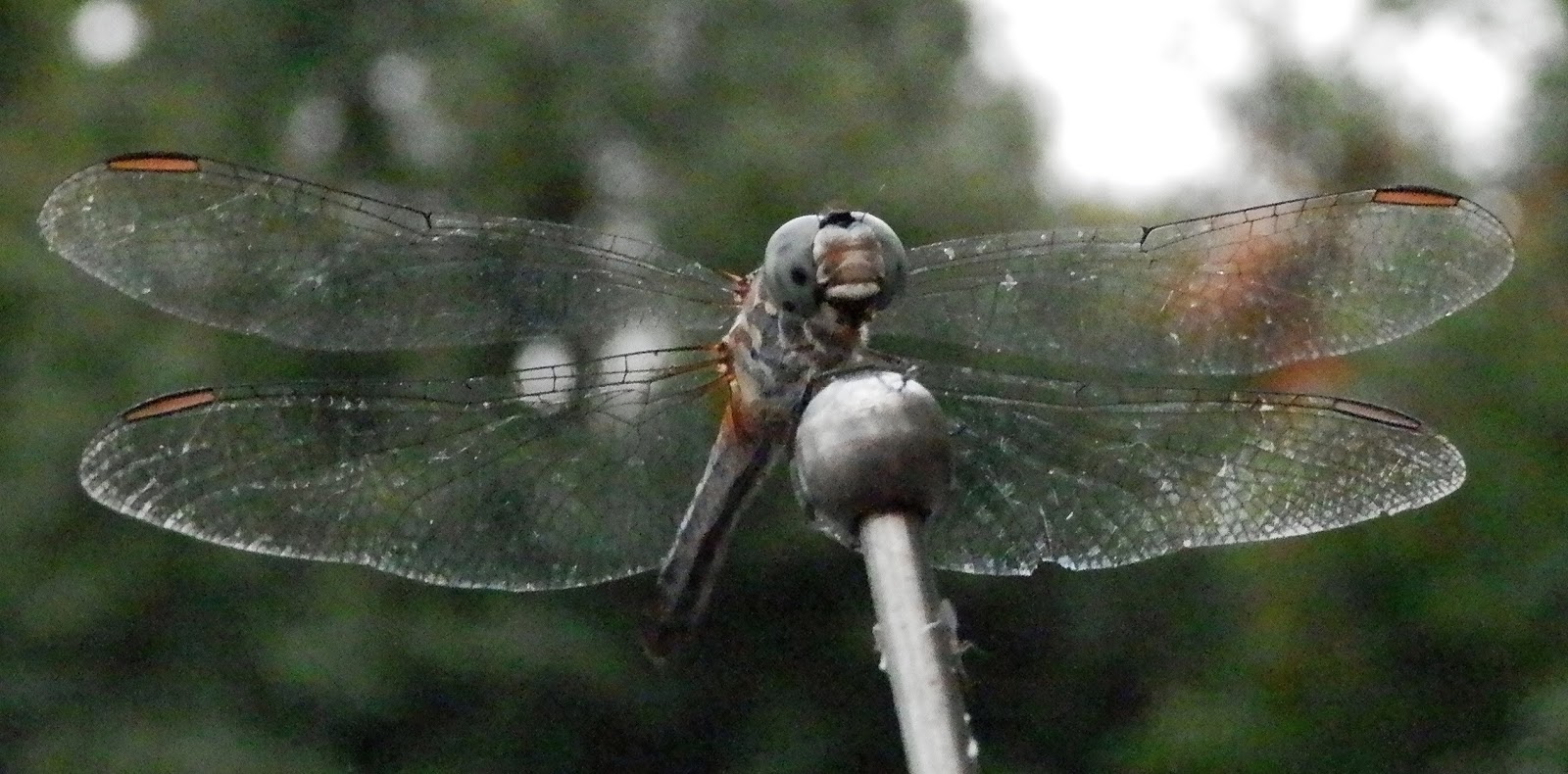
Today I'm going to share my Dragonfly and Damselfly photos with you, along with some basic information about the Dragonfly. I will also be adding a couple of links (if the blogger will allow it).
Evolving nearly 300 million years ago the Dragonfly (scientific name: Anisoptera) are insects belonging to the order of Odonata. It has 2 multifaceted eyes that are composed of up to 30,000 individual lenses. The hindwing is broader than the forewing. They have 6 legs, like all insects, but most cannot walk well. Look the same as the damselfly with a few differences. One being that they cannot rest their wings on their body. At rest their wings are slightly lowered and forward. They are the fastest insect in the world with recorded speeds up to 60 MPH. These insects are very important to our environment as they eat mosquitos, flies, ants, wasps, and the occasional butterflies creating a much needed balance. They live around Marshlands and other bodies of water because their offspring (larvae) known as nymphs are aquatic. 5,680 different species are known to inhabit our world. Their enemies ? Birds, lizards, frogs, spiders, fish, water bugs, and even other larger Dragonflies. Want to learn more about them? Here are a couple links so you can investigate yourselves. http://animals.pawnation.com/interesting-dragonflies-4480.html AND
http://en.wikipedia.org/wiki/Dragonfly I think you will be amazed by how complex they really are.
Evolving nearly 300 million years ago the Dragonfly (scientific name: Anisoptera) are insects belonging to the order of Odonata. It has 2 multifaceted eyes that are composed of up to 30,000 individual lenses. The hindwing is broader than the forewing. They have 6 legs, like all insects, but most cannot walk well. Look the same as the damselfly with a few differences. One being that they cannot rest their wings on their body. At rest their wings are slightly lowered and forward. They are the fastest insect in the world with recorded speeds up to 60 MPH. These insects are very important to our environment as they eat mosquitos, flies, ants, wasps, and the occasional butterflies creating a much needed balance. They live around Marshlands and other bodies of water because their offspring (larvae) known as nymphs are aquatic. 5,680 different species are known to inhabit our world. Their enemies ? Birds, lizards, frogs, spiders, fish, water bugs, and even other larger Dragonflies. Want to learn more about them? Here are a couple links so you can investigate yourselves. http://animals.pawnation.com/interesting-dragonflies-4480.html AND
http://en.wikipedia.org/wiki/Dragonfly I think you will be amazed by how complex they really are.
| Dragonfly hunting around my storage shed |
| Dragonfly |
| First photo of a dragonfly this close up |
| Damselfly: These are easy to recognize. They have 2 separated eyes. |
| Dragonfly (side view) |
| Back view of Dragonfly |
| Frontal view of Dragonfly |
| This is a Broad-Bodied Chaser Dragonfly |
| I think this may be a Yellow Striped Hunter |
| Damselfly |
| Keeping one eye on me & the other is looking for prey |
| This Dragonfly returned 3 nights in a row to hunt |
![]() |
| First Dragonfly photo taken. Been in love with them ever since |
Subscribe to:
Posts (Atom)
.jpg)